
 Game Development
  Game Art
 Resource Augmentation
 VR/XR Simulation

Medals of War
Introduction
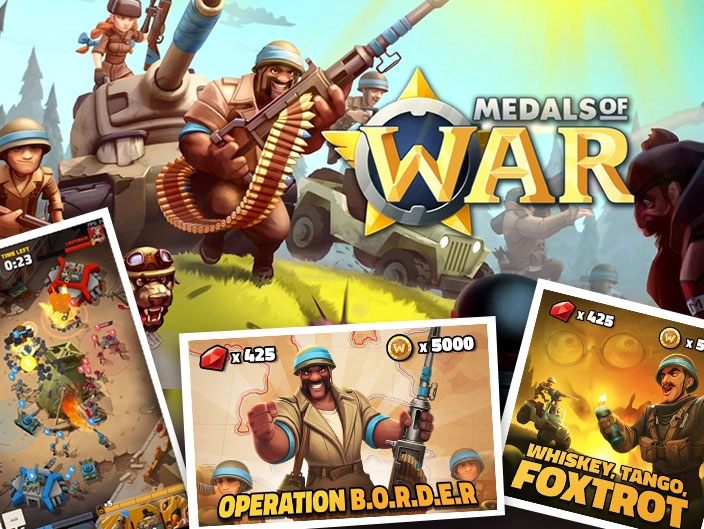
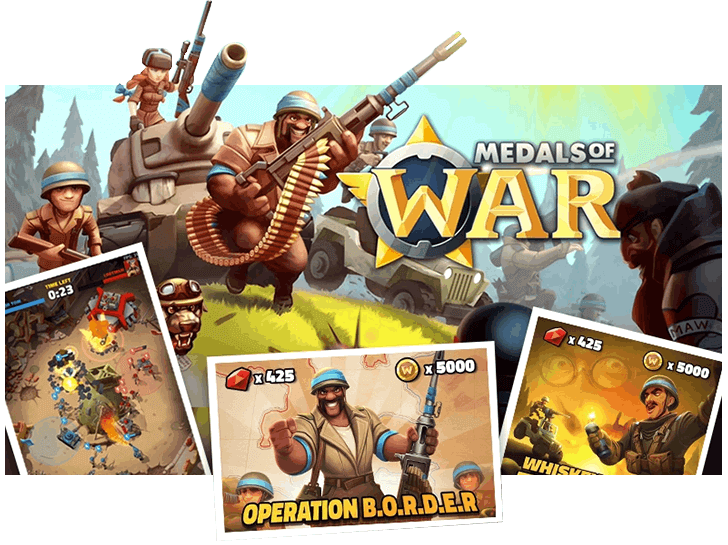
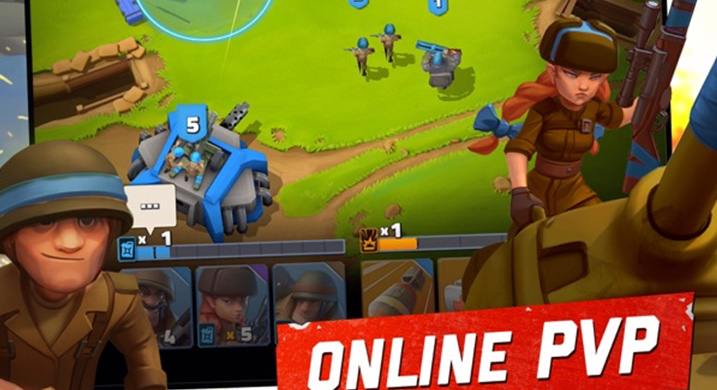
Medals of War is a competitive mobile strategy game set in a stylized WWII-inspired universe, built for short-session, real-time PvP gameplay on mobile devices. Players assemble squads, deploy tactical abilities, and compete in global multiplayer battles that balance accessibility with strategic depth.
Juego Studios delivered Medals of War as a production-ready, LiveOps-first mobile title, supporting deterministic multiplayer, scalable matchmaking, and seasonal content updates.
Engagement Model :
Full-Cycle Game Development + LiveOps
Game Engine :
Unity 3D (URP), Photon Fusion
Genre :
Strategy/Real-Time PvP/Multiplayer
Art Style :
Stylized 3D
Platforms :
Mobile (iOS & Android)
Challenges
Delivering competitive real-time multiplayer and LiveOps scalability under mobile constraints.

Real-Time Multiplayer at Scale — Designing authoritative, low-latency PvP systems resilient to mobile network instability, regional latency variance, and mid-match reconnections.

Deterministic Combat Resolution — Ensuring consistent combat outcomes across clients to prevent desynchronization and unfair competitive advantages.

Global Matchmaking Balance — Balancing skill-based matchmaking, latency optimization, and queue times across multiple regions.

Performance vs Visual Readability — Maintaining stable 60 FPS gameplay while rendering stylized environments, unit-heavy combat, and VFX on mid-tier mobile devices.

LiveOps Without Client Disruption — Supporting seasonal updates, balance changes, and event rollouts without requiring app store resubmissions or disrupting live sessions.

Competitive Fairness in F2P Monetization — Designing monetization systems that sustain revenue without introducing pay-to-win mechanics or power imbalances.

System Extensibility — Enabling new units, abilities, maps, and game modes to be added with minimal engineering overhead.

Solutions
Scalable multiplayer architecture, LiveOps-driven systems, and performance-optimized pipelines.

Photon Fusion Multiplayer Stack — Real-time networking with rollback support, lag compensation, reconnection handling, and a client-server authoritative model ensuring deterministic combat outcomes across all clients.

Elo-Derived Global Matchmaking — Skill-based matchmaking optimized for global concurrency and regional latency distribution.

URP Rendering Pipeline — Unity Universal Render Pipeline with custom Shader Graph workflows, LOD systems, GPU instancing, and texture atlasing for mobile-optimized lighting, VFX clarity, and consistent 60 FPS performance.

Firebase-Powered LiveOps Backend — AWS-hosted backend with Firebase Remote Config, feature flags, event scheduling, leaderboards, and economy validation, enabling runtime balance tuning and seasonal events without client updates.

Cosmetic-First F2P Economy — Battle Pass and cosmetic-only monetization preserving competitive integrity across PvP modes.
Modular Game Systems — Extensible architecture allowing new units, abilities, maps, and modes to be added with minimal engineering overhead.
Implementation
Executing competitive systems, LiveOps pipelines, and performance-focused gameplay loops.
- Stylized WWII Art Pipeline — Developed modular environments and units with optimized shaders, clear silhouettes, and readability-focused VFX for mobile screens.
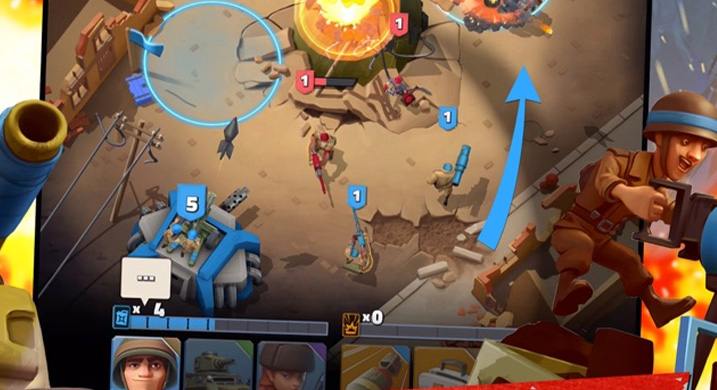
- Tactical Ability System — Built trigger-based abilities such as airstrikes and reinforcements, optimized to maintain frame stability during peak combat.
- Progression & Ranking Systems — Designed squad-based progression, league tiers, and cosmetic rewards to drive long-term engagement without power creep.
- Social & Guild Features — Introduced guild systems, cooperative progression, in-game chat, and social incentives to strengthen retention.
- Validated Leaderboards — Delivered global and regional leaderboards with scalable seasonal ranking resets and cohort-based progression.
Results and Impact
Competitive Multiplayer Stability
Delivered smooth, deterministic real-time PvP gameplay across global regions despite mobile network variability and latency fluctuations.
Consistent 60 FPS on Mid-Tier Devices
Achieved stable frame rates on mid-tier Android and iOS devices, even during VFX-intensive combat scenarios.
Continuous Live Updates Without Disruption
Deployed seasonal events, balance adjustments, and new content through backend-driven systems without impacting active player sessions.
Sustainable Growth Architecture
The modular system design and cosmetic-first monetization model support ongoing content expansion while maintaining competitive fairness.
Conclusion
Medals of War game demonstrates how deterministic multiplayer systems, performance-focused engineering, and LiveOps-first architecture can support competitive mobile strategy games at scale, delivering sustained engagement without compromising competitive integrity.
Frequently Asked Questions
Monetization is scoped to cosmetics and Battle Pass. Competitive advantages come from skill and strategy, not purchases.
Firebase Remote Config and feature flags allow server-side adjustments to balance parameters, features, and events — no client update or app store resubmission needed.
Unity’s URP with custom Shader Graph workflows, LOD systems, GPU instancing, texture atlasing, and Addressables for memory management maintain 60 FPS even during peak combat.