
 Game Development
  Game Art
 Resource Augmentation
 VR/XR Simulation

Super Club Soccer
Introduction
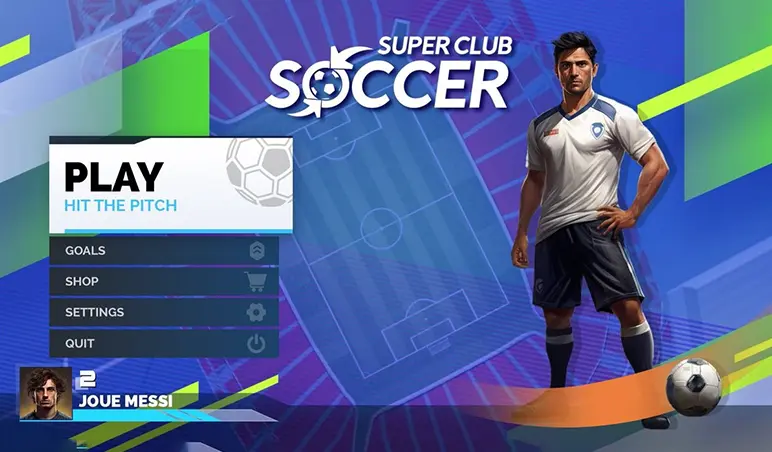
Super Club Soccer is a 3D, turn-based football simulation developed for PC (Steam), designed to offer a strategic alternative to traditional real-time sports games. Built from the foundation of Football Identity, the project required full-cycle development to deliver tactical gameplay, secure multiplayer, and a scalable architecture capable of supporting competitive online play and future expansions.
Engagement Model :
Full-Cycle Game Development
Game Engine :
Unity 3D
Genre :
Sports Simulation/Tactical Turn-Based Football, Online Multiplayer (Server-Authoritative)
Art Style :
3D
Platforms :
PC (Steam)
Challenges
The client needed to reinvent football gameplay while ensuring technical robustness for online competition.

Turn-Based Soccer Design Complexity — Designing a turn-based system that felt intuitive and engaging within a traditionally real-time sport.

Multiplayer Synchronization & Fair Play — Implementing online multiplayer for a turn-based game without latency, desync, or exploit risks.

Performance vs Visual Quality — Balancing 3D visual fidelity with consistent performance across varied PC hardware.

AI & Competitive Integrity — Creating intelligent single-player AI while maintaining server-side authority to prevent cheating in multiplayer modes.
Solutions Delivered
We provided full-cycle development with a strong focus on architecture, security, and gameplay systems.

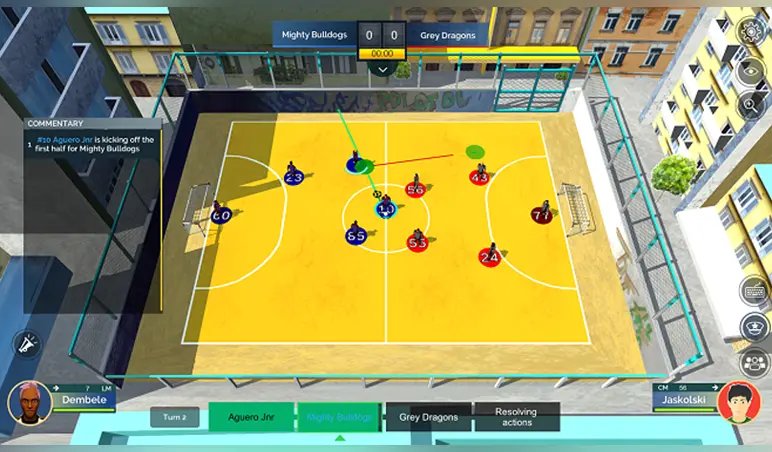
Multi-Phase Turn-Based Framework — Built a custom gameplay system combining realistic soccer physics with structured tactical decision-making across four phases: possession, movement, defense, and resolution, optimized for both PvP and AI matches.

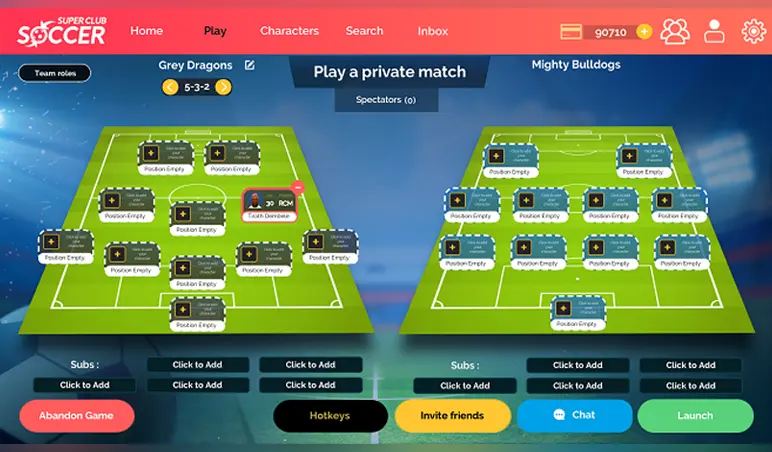
Server-Authoritative Multiplayer on Node.js — Deployed a socket-based backend where all critical game logic (matchmaking, validation, synchronization) runs server-side, with advanced anti-cheat measures including anomaly detection to block unauthorized actions.

Rule-Based Tactical AI — Developed heuristic-driven AI for offline and single-player modes, while keeping multiplayer logic fully server-controlled.

Scalable Backend with MongoDB Optimization — Indexed databases and optimized backend workflows to support peak loads during tournaments and high concurrency.

Modular Code Architecture — Built expandable systems with isolated feature modules to allow future modes, content, and features without refactoring core gameplay.
Implementation
Execution focused on performance, platform integration, and launch readiness.
- Performance Optimization Pipeline — Applied dynamic asset loading, compression, and GPU-friendly rendering to maintain stable frame rates across varied PC hardware configurations.
- Steam Platform Integration — Implemented Steam services for deployment, matchmaking, and player access.
- Iterative Balance Testing — Conducted extensive multiplayer stress testing and balance passes to validate competitive integrity before launch.
Results and Impact
The solution delivered both technical stability and a differentiated gameplay experience.
Successful Steam Launch
Released on PC with positive user feedback highlighting tactical depth and competitive structure.
Engaged Competitive Community
Active participation in online matches and tournaments validated the multiplayer architecture and balance systems.
Future-Ready Technical Foundation
Scalable server and modular codebase enabled smooth post-launch updates and feature expansion.
Client Vision Realized
Transformed Football Identity into a modern, turn-based football title aligned with the client’s long-term roadmap.
Conclusion
Super Club Soccer showcases how strategic full-cycle development, scalable backend architecture, and a clear gameplay identity can reshape a traditional sports genre. By combining turn-based mechanics with deep club management, the game offers a fresh experience for PC football fans—supported by ongoing LiveOps, secure multiplayer systems, and a scalable foundation for future growth.
Frequently Asked Questions
All critical game logic runs server-side on a Node.js socket server. Combined with anomaly detection and validated matchmaking, this prevents exploits and ensures competitive integrity.
The codebase uses isolated feature modules and expandable systems, allowing new modes, content, and features to be added without refactoring core gameplay or destabilizing existing systems.