

 Unity
Unity Unreal
 Godot
Godot
 Mobile
 PC
PC Console
 Full-Cycle
 Co-Development
 Outstaffing


Game Porting Services for Multi-Platform Launches
Our game porting services help studios launch on new platforms without performance regressions, failed submissions, or input rework, backed by senior teams who’ve supported 200+ shipped projects across PlayStation, Xbox, Nintendo Switch, PC, mobile, Unity, and Unreal.
- Home
- Game Porting





When expanding to new platforms, delays usually come from performance gaps, failed submissions, and input rework. Juego removes those bottlenecks with production-ready porting workflows that keep schedules and gameplay quality intact.
Video Game Porting Services for Every Platform Shift

Platform Specific Porting
Move a video game port to PC, console, or mobile with platform-native execution. We handle SDK integration, input remapping, UI scaling, memory limits, and compliance requirements so launches feel native without disrupting your internal roadmap.

Engine Specific Porting
Port titles across Unity, Unreal, or proprietary engines without losing gameplay feel. We rebuild shaders, rendering paths, physics dependencies, and asset pipelines while reducing legacy technical debt and improving long-term maintainability.

Generation To Generation Porting
Extend proven IP onto newer hardware with upgraded frame pacing, faster loads, higher resolutions, and new platform features. We manage certification from the start to reduce resubmissions and protect launch windows.


Porting To VR Platforms
Adapt existing games for VR with 90FPS stability, comfort-safe locomotion, controller mapping, and interaction redesign. We turn traditional titles into immersive products without compromising performance or overcommitting internal engineering resources.

Multiplayer & Online Services Porting
Online features break differently than single-player ports. We migrate netcode, matchmaking, leaderboards, cloud saves, and friend systems to PSN, Xbox Live, and Nintendo Online while preserving gameplay parity and session stability. Cross-platform multiplayer and shared progression are scoped and validated before launch.

Post Porting Services
After launch, a video game port can degrade through firmware changes, SDK revisions, driver conflicts, and store policy updates. We run regression testing, crash telemetry, hotfix deployment, and compatibility patches to protect retention and platform revenue.
About US

10+
Years in Market

50+
Clients

200+
Projects

250+
Team
One of the Most Trusted Game Development Studios

Well, I signed up to work with Juego Studio for a project and they really exceeded my expectations. The project was delivered on time, with no hiccups whatsoever. They are talented and professional game developers who get the job done without fail. I cannot recommend them enough!
Sam Anthony Gilfred
Sr. Project Manager
Amazon

I was very pleased with the quality of the work we received for our project. They were delivered on time and with very minimal feedback from our team. Juego Studios is good company to work and will be looking to them for our future projects!
Paul Skinner
Director
Wicked Witch Studios

It's safe to say that most regular human beings would be shocked and daunted at the idea of having to do a high quality game for iOS and Android, within a deadline of few months. I can honestly say that this work not the case with Juego Studios. They responded reactively, calmly and productively, and ended up delivering a game that both myself, the LatAm team, and users, were very happy with. There is a calm and experienced professionalism to the Juego team, and I would not hesitate to use them again.
Josh Saunders
Senior Director,
Innovation (Warner- Group)

The Juego Studios team was instrumental in developing one of our recent apps. We were able to supplement our small development team with several more developers that worked on front and backend features. They filled gaps wherever necessary and accelerated our time to market. After release, they continued to help us with new features and bug fixes. I would work again with them if needed.
Robert Baily
Director of Application Programming
JumpStart Games


Why Leading Game Porting Studios Choose Juego

First-Attempt Certification
Failed submissions delay launch revenue and burn sprint capacity. By building against TRC, TCR, Lotcheck, App Store, and Google Play requirements from the start, not at the end, ports clear approval faster with fewer resubmission cycles and protected launch windows.

Performance Optimization
Ports often ship with unstable frame pacing, memory spikes, and device-specific issues. We profile CPU, GPU, streaming, thermals, and load times to deliver stable performance across console, PC, and mobile hardware.

Team Resource Scaling
Hiring experienced porting engineers takes months most teams do not have. Juego deploys senior specialists quickly, giving you immediate capacity for active milestones without long recruitment cycles or permanent overhead.

Technical Debt Management
Legacy codebases, deprecated plugins, and brittle architecture slow every port. We refactor bottlenecks, modernize dependencies, and stabilize build systems so platform expansion does not compound existing engineering debt.

Development Tools & Infrastructure
Many vendors slow teams with disconnected workflows. We integrate into Perforce, Git, Jira, CI/CD pipelines, branching strategies, and automated build systems so porting work moves inside your production environment.

Communication & Dedicated PM
Poor vendor communication creates hidden delays and late surprises. A dedicated producer runs standups, milestone reporting, risk escalation, and timezone-aligned updates so you always know status, blockers, and next actions.
Our Case Studies
Medals Of War
Medals of War is a strategy game with a military theme. Players command their own armies using different types of troops and compete against one another in PvP battles.
 Platform: iOS & Android
 Game Engine: Unity 3D
 Genre: Real Time Strategy
Art: 3D
Genre: Real Time Strategy
Art: 3D

Genetrix - VR Shooter Game
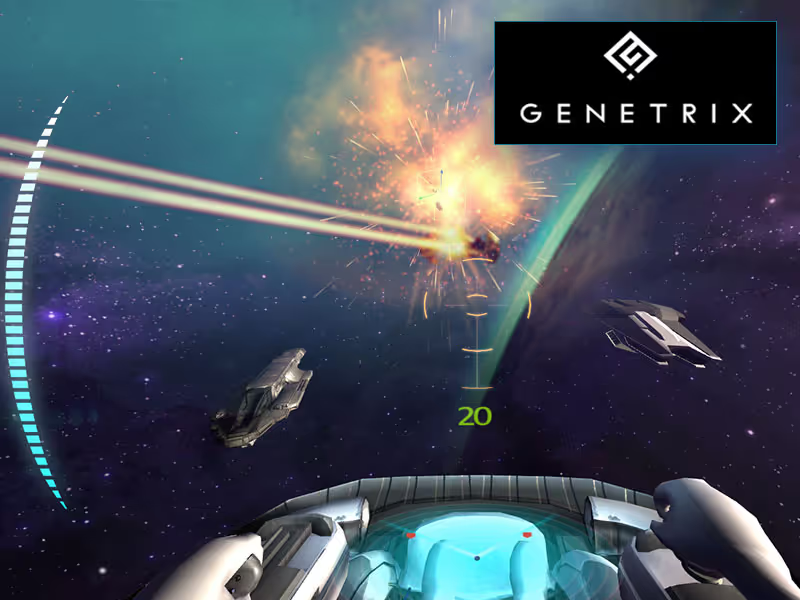
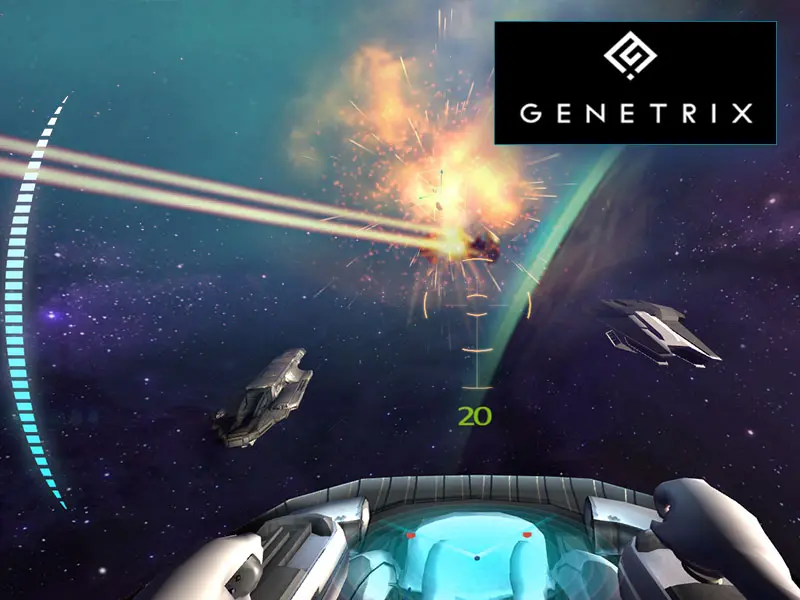
Genetrix is a VR space shooter game which is set in a deep part of our galaxy with Sci-fi based futuristic game designs. Game-play revolves around the battle sequence in space, among asteroids, shooting down your opponents ships. Gamers will be piloting their spaceships, while exploring the futuristic feel of outer space.
Platform: VR
Game Engine: Unity 3D
Genre: Space shooter game
Art: 3D
SUPER CLUB SOCCER
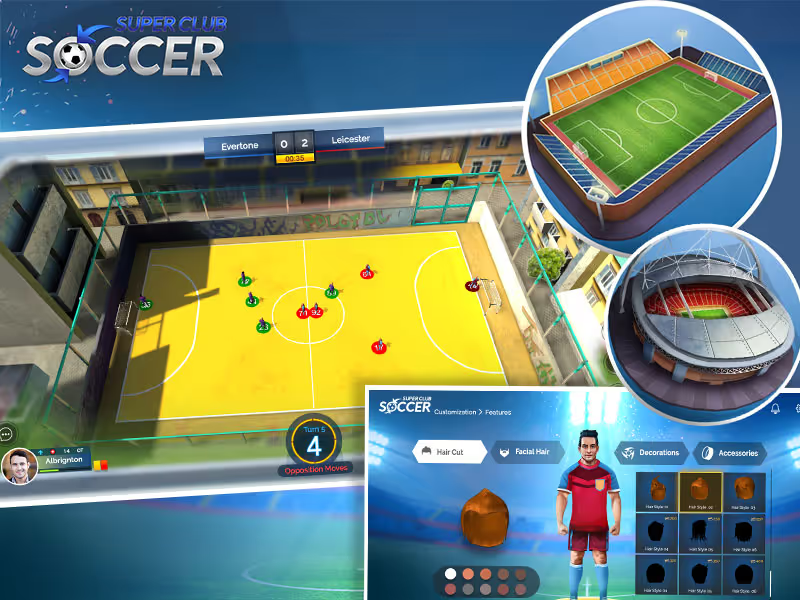
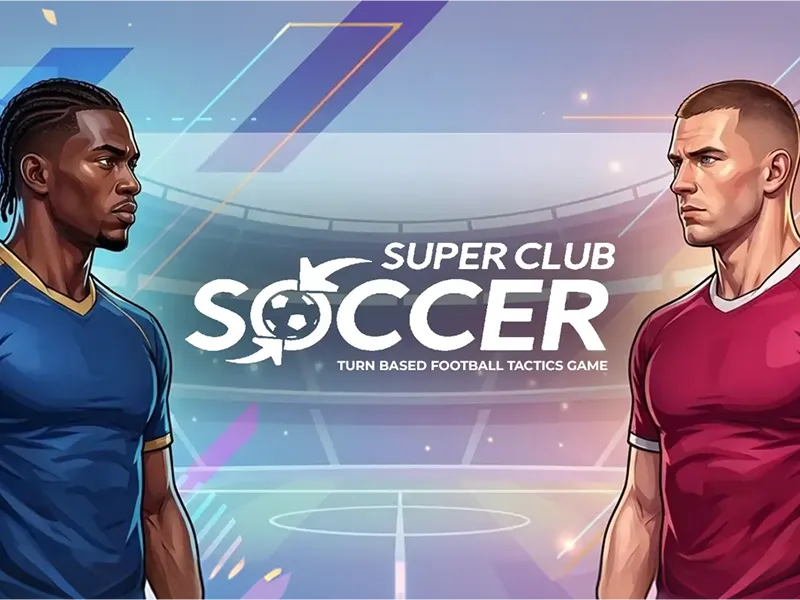
Super Club Soccer (SCS) is a soccer video game with turn-based gameplay mechanics. Compared to traditional soccer games, the gameplay is more strategic. In addition, the game has club and player management features, multi-player gameplay options, and an intelligent in-game AI.
Platform: PC, Stream
Game Engine: Unity
Genre: Sports, Simulation
Art: 3D
Game Porting Process We Follow
Platform Audit & Scope Lock
We begin with codebase review, engine dependencies, middleware risks, memory targets, and platform compliance checks. Clear scope, milestones, and effort mapping prevent hidden overruns, late rework, and schedule drift before production starts.
Cross-Platform Code Migration
Core systems are adapted for target hardware without destabilizing live code. We handle SDK integration, input abstraction, save data continuity, network services, and platform APIs so migration stays controlled, scalable, and release-ready.
Asset Optimization & Compression
Art assets are rebuilt for each device profile through texture streaming, LOD tuning, mesh reduction, audio compression, and memory balancing. This protects frame rate, load speed, and visual quality across every supported platform.
Platform-Native UX & Controls
Interfaces and controls are redesigned for touchscreen, controller, keyboard, and VR inputs. We improve readability, response timing, button mapping, and onboarding flow so every version feels native and reduces refund-triggering friction.
Certification-Ready QA
Unlike most game porting companies that run submission testing as a final step, we begin automated regression, hardware validation, and compliance checks during production. Blockers are surfaced and resolved while recovery time still exists, so when submission arrives, the build is already compliant.
Launch & Ongoing Stability
Before release, we validate build packaging, store metadata, crash reporting hooks, and day-one patch readiness. After launch, the same team monitors live stability, initiates hotfix pipelines, and manages SDK and firmware compatibility updates — no re-onboarding, no handoff gaps.
Looking for a dependable partner for your next game port?
Frequently Asked Questions
Modern ports involve far more than moving a build from one device to another. Studios usually need platform-native optimization, certification readiness, multiplayer migration, input redesign, memory stabilization, and post-launch maintenance support once games begin expanding across multiple ecosystems.
Our porting support includes:
- PC, console, and mobile game porting
- Unity, Unreal, and proprietary engine migration
- Multiplayer and online services migration
- VR adaptation and input redesign
- Generation-to-generation platform upgrades
- Platform-specific optimization and QA
- Certification preparation for console and storefront ecosystems
- Post-launch compatibility, patching, and stability support
The focus is preserving gameplay parity, launch stability, and long-term maintainability while reducing certification delays, performance regressions, and platform-specific rework.
Successful porting usually depends on reducing hidden technical risks early before migration complexity begins affecting launch timelines or gameplay stability.
Our porting workflow typically includes:
- Platform audit and technical scope validation
- Codebase and middleware dependency review
- Cross-platform migration and SDK integration
- Asset optimization and memory balancing
- Platform-native UI, controls, and UX adaptation
- Compliance validation and regression testing
- Hardware profiling and performance stabilization
- Certification preparation and launch-readiness testing
- Post-launch monitoring and hotfix deployment
By validating platform risks continuously throughout production instead of waiting until submission stages, teams recover faster from blockers and reduce expensive late-stage rework.
Most porting problems come from differences in hardware architecture, rendering pipelines, memory limitations, certification requirements, controller behavior, and platform APIs. Games that perform well on one platform can quickly develop instability, input friction, or optimization regressions once migrated elsewhere.
The most common challenges include:
- Frame pacing instability and memory spikes
- Platform-specific rendering and shader issues
- Input remapping and controller adaptation
- UI scaling across different screen environments
- Multiplayer and backend compatibility problems
- Certification failures and compliance blockers
- Save migration and progression continuity risks
- Hardware-specific crashes and performance regressions
We address these through continuous profiling, platform-native optimization, regression testing, compliance validation, input redesign, hardware testing, and staged migration workflows throughout production instead of treating optimization and certification as final-stage tasks.
Porting affects performance differently across platforms because hardware architecture, memory budgets, rendering systems, input layers, and platform APIs behave differently under production load. Without platform-specific optimization, ports often introduce frame pacing instability, memory spikes, thermal throttling, longer load times, or inconsistent gameplay responsiveness.
Performance stability usually depends on how early optimization workflows are integrated into the migration process. Continuous profiling, shader adaptation, asset restructuring, streaming optimization, and hardware validation help preserve gameplay parity while ensuring the port behaves reliably across the target platform ecosystem rather than functioning like a direct conversion build.
Porting workflows are increasingly shifting toward scalable cross-platform ecosystems rather than isolated one-time migrations. Studios now prioritize shared infrastructure, continuous deployment, and platform-native optimization much earlier in development cycles.
Current trends shaping modern porting pipelines include:
- Cross-platform progression and shared accounts
- LiveOps-aware porting infrastructure
- Automated compliance and regression testing
- Cloud-based build and deployment pipelines
- Real-time telemetry and crash analytics integration
- Platform-native adaptive UI systems
- VR and handheld optimization workflows
- Performance automation across fragmented hardware environments
Studios are also investing more heavily in scalable architecture so future platform expansion becomes faster, lower-risk, and easier to maintain operationally after launch.
PC ports help studios extend the commercial lifespan of successful mobile titles while reaching players who prefer larger-screen gameplay, keyboard and mouse input, higher visual fidelity, and longer gameplay sessions.
The biggest advantages of game porting outsourcing include:
- Expanded audience reach beyond mobile storefronts
- Increased revenue opportunities across additional platforms
- Higher retention through longer session environments
- Improved visual presentation and hardware scalability
- Better support for multiplayer and community ecosystems
- Greater flexibility for monetization and content expansion
- Stronger discoverability through PC storefront visibility
Mobile-to-PC expansion also allows studios to strengthen franchise longevity without rebuilding gameplay systems entirely from scratch.